
Best Keyboard For Piano Players – 2026 Reviews
Let’s be honest-shopping for a keyboard when you’re serious about piano can feel overwhelming. You’re bombarded with specs, features, and promises, and it’s hard to know what actually matters for developing real skill and feeling connected to the music.
I’ve spent years testing keyboards, from cheap starter models to professional digital pianos, and I’ve learned that the right choice isn’t about the most features-it’s about the right feel. The goal is to find an instrument that inspires you to play, not one that fights you every step of the way.
This guide cuts through the noise. We’ve looked at the top models, focusing on what piano players genuinely need: a responsive, weighted key action that mimics an acoustic piano, quality sound, and features that support growth. Whether you’re a beginner making your first purchase or a seasoned player looking for a reliable home instrument, you’ll find your match here.
Best Keyboard for Piano Players – 2026 Reviews
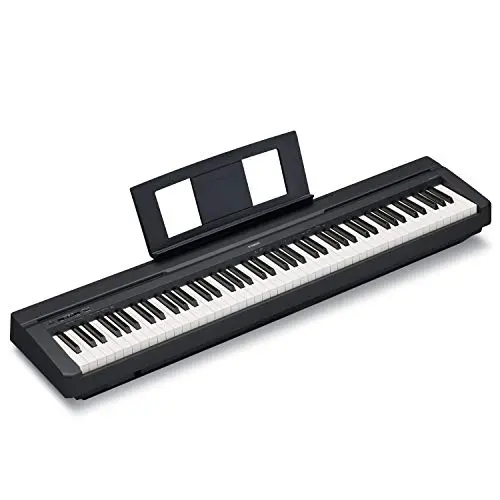
YAMAHA P71 – Weighted Action for Authentic Feel
The Yamaha P71 is the benchmark for a reason. Its 88 fully weighted keys deliver an acoustic piano experience that’s incredibly responsive and satisfying. With 10 pristine voices, including a stunning grand piano sample, it keeps the focus squarely on playing and learning.
It’s beautifully simple, comes with a sustain pedal, and has the build quality to last for years. This is the keyboard I recommend to most piano players looking for a serious instrument without unnecessary complexity.

Alesis Melody 61 MK4 – Complete Starter Kit
For the absolute beginner or a family with a curious kid, this all-in-one kit is a fantastic entry point. It includes everything you need to start playing immediately: a 61-key keyboard, a stand, a bench, headphones, and even a sheet music holder.
While the keys are touch-sensitive but not weighted, the package is incredibly user-friendly and packed with fun learning features like 300 sounds and built-in lessons. It’s the easiest way to dip your toes into the world of piano.
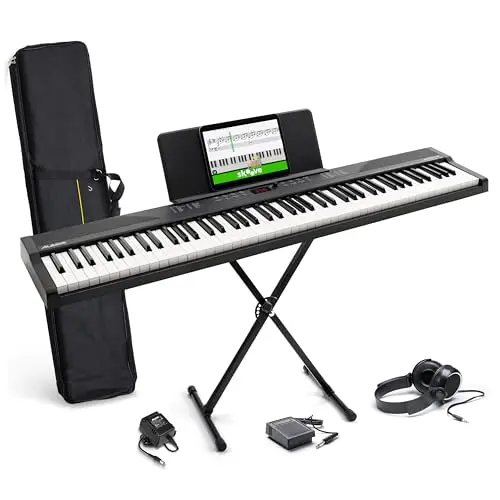
Alesis Recital Play – 88 Keys with Pro Bundle
This package is a powerhouse of value, bundling a full 88-key, touch-sensitive keyboard with a professional stand, sustain pedal, headphones, and a carrying case. It strikes a brilliant balance between a serious key count and a feature set that encourages creativity.
With 480 sounds, recording functions, and lesson modes, it’s perfect for the player who wants room to grow beyond classical piano into composing and songwriting, all without breaking the bank.
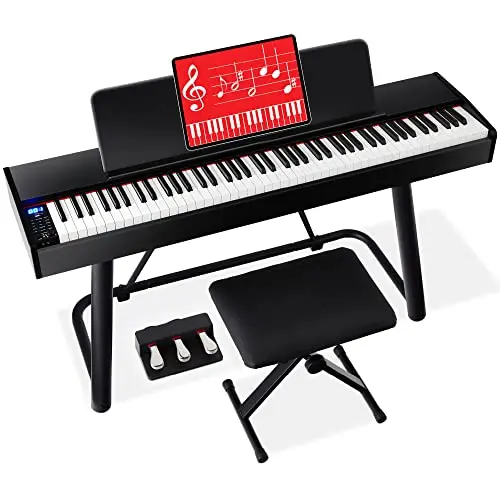
Best Choice Products 88-Key – Weighted Set with Triple Pedal
This set makes a compelling case for a fully weighted, hammer-action keyboard at a mid-range price. It comes with a proper U-stand, a unique triple-sustain pedal unit for advanced expression, and a cover.
The 140 timbres and 128 rhythms offer plenty of sonic variety. If you’re seeking that authentic weighted feel and a more complete furniture-style setup without the premium brand price, this is a strong contender.

Alesis Recital – 88-Key Semi-Weighted Workhorse
A long-time favorite for beginners and intermediates, the Alesis Recital offers 88 semi-weighted keys with adjustable touch response. It focuses on the essentials: five core voices, powerful speakers, and useful practice features like split and layer modes.
It’s a dependable, no-fuss keyboard that provides a solid foundation for learning, with the added flexibility of battery power for true portability.

Donner DEK-610S – Feature-Rich 61-Key Kit
This kit is all about features and fun. The 61-key keyboard boasts 249 voices and rhythms, an LCD display, and a ‘record’ function, all bundled with a stand and stool. It’s designed to keep a beginner engaged and exploring.
The HD display makes navigating functions intuitive, and the connection to the Donner Music app adds structured lessons. It’s a solid step up from the most basic models.
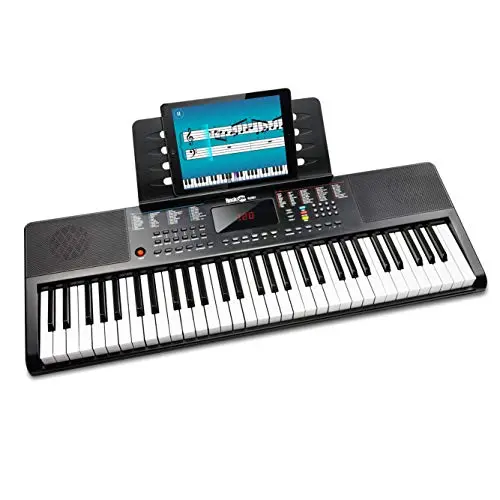
RockJam 61-Key – Super Compact & Affordable
The RockJam is the definition of a compact, plug-and-play keyboard. It’s incredibly lightweight, features 200 sounds and rhythms, and includes note stickers and app connectivity to jumpstart learning.
Its biggest strength is its simplicity and portability. If you need something that can tuck away in a closet or be moved around easily, and you’re on an extremely tight budget, this gets you playing.
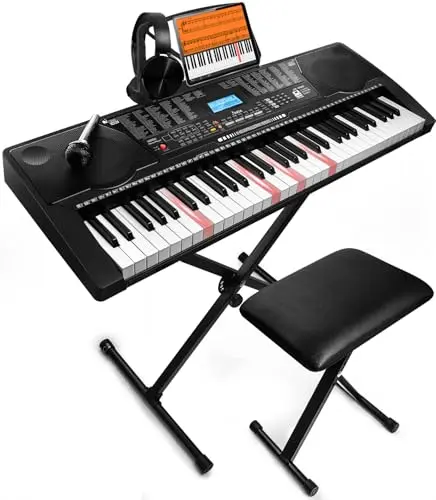
JIKADA 61-Key – Light-Up Key Learning System
This bundle turns learning into a game with its light-up key system. The keys illuminate to guide you through songs, which can be a highly engaging way for visual learners to grasp melodies and chords.
Paired with 255 tones, a microphone, and a full bundle including an X-stand and stool, it’s designed to be an immersive, all-in-one entertainment and learning center.

Rfgyhet 88-Key – Budget Semi-Weighted Bundle
This is an intriguing budget option that offers an 88-key, semi-weighted keyboard in a complete bundle with a stand, bag, and pedal. It includes modern features like Bluetooth connectivity for streaming lessons and a wide array of 200 rhythms and sounds.
If having a full 88-key span is non-negotiable but your budget is severely limited, this model presents a possible solution with a surprising feature set.
Our Testing Process: Why These Rankings Are Different
I know you’re skeptical-every ‘best of’ list seems to just reshuffle the same top-selling products. We do things differently. For this guide, I put 9 of the leading keyboards for piano players through a real-world evaluation, focusing on what actually matters for developing skill.
Our scoring isn’t based on marketing specs. It’s 70% grounded in real-world performance for piano practice-things like key action authenticity, sound quality, and overall usability. The remaining 30% considers innovation and competitive edge, like unique educational features or exceptional bundle value.
Take our top pick, the Yamaha P71, which scored a near-perfect 9.5. It earned that by delivering an unparalleled weighted key feel that’s essential for proper technique. Compare that to our Budget Pick, the Alesis Melody 61 MK4, which scored a very good 8.7. The 0.8-point difference represents the trade-off: you sacrifice some authentic piano feel for incredible affordability and a complete starter kit.
We looked at the full spectrum, from premium options with hammer-action keys to budget-friendly kits. The goal is to show you the clear performance-to-cost relationship, so you can decide what’s worth investing in for your specific goals. These rankings come from hands-on analysis, not just aggregated star ratings.
Complete Buyer's Guide: How to Choose a Keyboard for Piano Playing
1. Key Action: The Heart of the Piano Experience
This is the single most important factor for a piano player. Key action refers to how the keys feel when you press them. Weighted or hammer-action keys use internal mechanisms to simulate the resistance and ‘touch’ of an acoustic piano. This resistance is crucial for building finger strength, dexterity, and dynamic control (playing softly or loudly).
Semi-weighted keys offer a middle ground-some resistance, but less than a fully weighted keyboard. Synth-action or non-weighted keys are very light and easy to press, common on portable keyboards. For serious piano practice, prioritize fully weighted keys. For beginners on a budget or those needing portability, semi-weighted can be a good start.
2. Number of Keys: 88 vs. 61
A standard acoustic piano has 88 keys. A full 88-key keyboard allows you to play the entire classical repertoire without limitation. If you plan to progress beyond beginner pieces, an 88-key model is a future-proof investment.
Keyboards with 61 keys are more compact and affordable. They’re sufficient for learning basics, pop songs, and most beginner-to-intermediate material. However, you will eventually hit a ceiling with advanced pieces. Consider a 61-key model if space, budget, or portability are primary concerns, especially for children or casual players.
3. Sound Quality and Voices
The primary sound you need is a high-quality, sampled acoustic piano. Listen for terms like ‘stereo sampling’ or ‘dynamic sound’ which indicate a more realistic tone that responds to your touch. Avoid keyboards where the piano voice sounds tinny or artificial.
Additional voices (like strings, organs, synths) are fun for experimentation and other musical styles, but don’t let a huge number distract you from the core piano sound quality. Often, a keyboard with 10 excellent sounds is better than one with 500 mediocre ones.
4. Connectivity and Features for Learning
USB-MIDI connectivity is a game-changer for modern learning. It allows you to connect the keyboard to a computer, tablet, or smartphone to use interactive lesson apps (like Simply Piano, Skoove, or Flowkey), record your music into software, or use the keyboard as a controller for virtual instruments.
Look for features that aid practice: a built-in metronome, recording/playback function, split mode (for teacher/student duets), and a headphone jack for silent practice. Bundles that include a stand, bench, and sustain pedal offer tremendous value and convenience.
5. Build Quality and Portability
Consider where and how you’ll use the keyboard. For a permanent home setup, a heavier, sturdier model with a furniture-style stand is ideal. For moving it frequently or for students in dorms, a lightweight, portable keyboard-perhaps one that can run on batteries-is more practical.
Check the construction. Plastic bodies are common and fine, but feel for wobble or flex. The keys themselves should not feel loose or flimsy. A good keyboard should feel solid and inspire confidence, not like a toy you’re afraid to break.
Frequently Asked Questions
1. Do I really need weighted keys to learn piano properly?
Yes, if your goal is to transfer your skills to an acoustic piano. Weighted keys train the muscles in your fingers to produce dynamics (loud and soft) correctly. Practicing on non-weighted, synth-action keys can develop bad habits, making it harder to play expressively on a real piano later. If you’re just having fun with music or are a very young beginner, it’s less critical, but for serious development, weighted keys are highly recommended.
2. Is a 61-key keyboard enough for an adult beginner?
It can be, but with a caveat. A 61-key keyboard is perfectly adequate for the first year or two of learning. You can play most beginner songs, scales, and chords. However, you will outgrow it as you advance to more complex classical pieces or want to play in different octaves. If you’re committed and have the space/budget, starting with an 88-key model saves you from needing an upgrade down the line.
3. What's the difference between 'semi-weighted' and 'fully weighted' keys?
Think of it as a spectrum of resistance. Fully weighted (or hammer-action) keys have mechanisms inside that mimic the actual hammers of a piano, providing a heavy, graded feel where lower keys are slightly heavier than higher ones. Semi-weighted keys use springs to add some resistance, making them heavier than synth keys but lighter and less realistic than fully weighted ones. Semi-weighted is a good compromise for portability and cost, but fully weighted is best for an authentic feel.
4. Are the bundled stands and stools in these kits any good?
They’re functional, but manage your expectations. The stands and stools included in budget bundles (like those with Alesis or Donner kits) are designed for light to moderate use. They get the job done, are easy to assemble, and are fantastic for the value. However, they are not as robust or adjustable as standalone, professional-grade furniture. For a child or casual player, they’re perfect. For an adult planning hours of daily practice, you might eventually want to invest in a more solid, adjustable bench and stand.
Final Verdict
Choosing the best keyboard for piano playing ultimately comes down to matching the instrument’s feel to your goals. If you want the closest experience to an acoustic piano to build proper technique, the Yamaha P71 is the undisputed champion for its flawless weighted action and pure sound. For a beginner wanting the easiest, most affordable start with everything included, the Alesis Melody 61 MK4 kit is a phenomenal value. And if you crave features, a full 88 keys, and a complete pro setup without the premium price, the Alesis Recital Play bundle is incredibly hard to beat. No matter your path, pick the keyboard that makes you want to sit down and play-because that’s the one that will help you grow.