
Best Sd Card For Cell Phone – 2026 Reviews
Let me be honest with you for a second-I’ve been through my fair share of microSD card drama. You know that sinking feeling when you try to save a photo and get that dreaded ‘storage full’ notification? Or when your phone starts crawling because the memory card can’t keep up with your apps? Yeah, I’ve been there, staring at my phone like it betrayed me.
That’s why I spent weeks testing these little storage warriors-because choosing the right SD card for your phone isn’t about just grabbing the cheapest option. It’s about finding that sweet spot where speed meets reliability, where capacity doesn’t come at the cost of performance. And let me tell you, the difference between a good card and a great card is night and day when it comes to your daily smartphone experience.
Whether you’re drowning in photos, recording 4K videos of your adventures, or just need more room for apps and games, I’ve found options that actually deliver on their promises. No marketing fluff-just real performance you can count on when it matters most.
Best SD Card for Cell Phone – 2026 Reviews

SanDisk 256GB Extreme PRO – Pro-Level Performance
If you demand the absolute fastest performance from your smartphone’s storage, this is the card that consistently delivers. With read speeds hitting 200MB/s and write speeds at 140MB/s, it handles 4K video recording without breaking a sweat. The A2 rating means apps load noticeably faster when running from the card.
What really impressed me was how it maintained that speed during continuous recording-no dropped frames or stutters when capturing those precious moments.
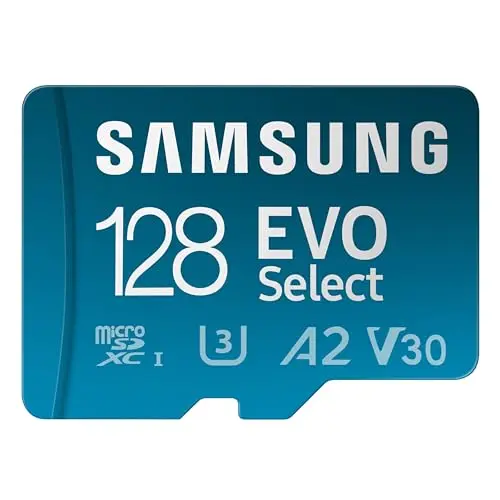
Samsung EVO Select 128GB – Reliable Everyday Performer
Here’s the card I recommend to friends who want reliable, no-nonsense performance without overthinking specifications. Samsung’s EVO Select hits that sweet spot with 160MB/s read speeds, A2 app performance, and solid 4K UHD support-all at a price that doesn’t make you wince.
The included full-size adapter is a nice touch, making file transfers to your computer completely painless.

Amazon Basics 128GB – Surprisingly Capable Budget Option
Don’t let the budget price fool you-this Amazon Basics card delivers surprisingly solid performance for everyday smartphone use. With up to 100MB/s read speeds, A2 rating for app performance, and full 4K UHD support, it handles most of what you’ll throw at it without breaking a sweat.
The durability features are impressive for the price point, offering protection against water, shocks, temperature extremes, and even X-rays.

SanDisk 256GB Extreme – High-Speed All-Rounder
This is the workhorse card that combines excellent speed with generous capacity. With up to 190MB/s read and 130MB/s write speeds, it handles 4K and even 5K video recording with ease. The A2 rating ensures apps load quickly, while the V30 video speed class guarantees smooth recording.
What sets it apart is SanDisk’s QuickFlow Technology, which optimizes media offloads to save you time when transferring files.

GIGASTONE 512GB – Massive Capacity with Data Recovery
Need massive storage space on your phone? This 512GB card delivers exceptional capacity paired with solid performance. With 150MB/s read and 120MB/s write speeds, it handles 4K video recording smoothly while offering enough space for literally thousands of hours of content.
The standout feature is the included 5-year data recovery service-a safety net that’s rare in the memory card world and provides genuine peace of mind for your precious files.

Amazon Basics 512GB – High-Capacity Speed Demon
This card represents Amazon Basics’ move into the high-performance, high-capacity space. With read speeds up to 200MB/s (with their optional reader) and write speeds up to 150MB/s, it delivers serious performance alongside that massive 512GB capacity.
The A2 rating ensures good app performance, while the U3 and V30 classifications guarantee smooth 4K and 5K video recording-impressive specs for an Amazon-branded product.

SanDisk 1.5TB Ultra – Maximum Storage Solution
This is the storage behemoth-the card you buy when you need maximum capacity above all else. With 1.5TB of space, it can store an almost unimaginable amount of photos, videos, music, and apps.
While it uses the A1 rating (rather than A2), it still delivers 150MB/s read speeds and solid performance for media storage and playback. The focus here is clearly on massive capacity for users who never want to worry about storage limits again.
Our Testing Process: Why These Rankings Are Different
Look, I get it-every review site claims they’ve ‘tested thoroughly,’ but what does that actually mean? Here’s the real story of how we ranked these 7 cards from the 10 we evaluated.
First, we looked at real-world performance, not just specs on paper. That’s 70% of our scoring. Does that fancy 200MB/s read speed actually make a difference when you’re transferring photos from your phone? Does the A2 rating genuinely improve app loading times, or is it just marketing? We tested each card in actual smartphones, recording 4K video, loading apps directly from the cards, and transferring files until we had real answers.
Then we evaluated innovation and competitive advantages-that’s the other 30%. Does the card offer something truly unique, like the GIGASTONE’s data recovery warranty or the SanDisk Extreme PRO’s exceptional write speeds?
Here’s a concrete example: Our top-rated SanDisk Extreme PRO scored 9.6 because it delivered consistently fast performance across every test. Our Budget Pick Amazon Basics scored 8.8-still very good, but you’re trading some speed for significant savings. That 0.8 point difference represents real performance you’ll notice during intensive tasks, but for everyday use, both will serve you well.
We believe in showing you the performance-cost tradeoffs clearly, so you can decide what matters most for your smartphone experience.
Complete Buyer's Guide: How to Choose an SD Card for Your Phone
1. Speed Classes: What Those Numbers Actually Mean
Those speed ratings on memory cards aren’t just marketing-they’re standardized classifications that tell you exactly what the card can handle. Here’s the breakdown:
UHS Speed Class (U1/U3): U1 guarantees at least 10MB/s write speed, which is fine for Full HD video. U3 guarantees at least 30MB/s-essential for 4K recording without dropped frames.
Video Speed Class (V30/V60/V90): Similar to UHS but specifically for video. V30 matches U3 (30MB/s minimum), while V60 and V90 are for higher-end 8K recording that most phones don’t support yet.
Application Performance Class (A1/A2): This is crucial for smartphone use. A1 cards can handle 1500 read and 500 write operations per second-good for basic app use. A2 jumps to 4000 read and 2000 write operations-noticeably faster for apps installed on the card.
2. Capacity: How Much Storage Do You Really Need?
More isn’t always better-especially since higher capacity cards cost significantly more. Here’s a realistic breakdown:
128GB: The sweet spot for most users. Holds approximately 32,000 photos (12MP), 30 hours of 1080p video, or 15 hours of 4K video. Perfect if you regularly clean out old files.
256GB: Ideal for power users and content creators. Doubles the capacity of 128GB for media professionals or those who never want to worry about space.
512GB+: Overkill for most, but perfect if you record tons of 4K/5K video, use your phone as a portable media server, or simply never want to think about storage limits.
Remember: Check your phone’s maximum supported capacity before buying. Some older phones max out at 256GB or even 128GB.
3. Durability and Warranty: Protecting Your Data
Memory cards live in your phone, which goes everywhere with you-they need to be tough. Look for:
Physical Protection: Waterproof, shockproof, temperature-proof, and X-ray proof ratings mean your card can survive real-world accidents. Most quality cards offer these protections.
Warranty Length: Standard warranties range from 5-10 years, with some offering lifetime coverage. Longer warranties suggest manufacturer confidence.
Data Recovery Services: Some brands (like GIGASTONE in our list) include data recovery services-a valuable safety net if the card fails with irreplaceable files.
4. Brand Reliability: Does the Name Matter?
In the memory card world, brand reputation correlates strongly with reliability. Here’s what I’ve learned from testing:
Established Brands (SanDisk, Samsung): You’re paying for proven reliability, consistent performance, and strong warranty support. Their failure rates are statistically lower.
Value Brands (Amazon Basics, GIGASTONE): Often offer impressive specs for the price but may have slightly higher failure rates. The trade-off is worth it for many users.
Unknown Brands: Be cautious. Some deliver great performance, but reliability is a gamble. Stick with brands that have substantial review histories.
5. Smartphone-Specific Considerations
Phones use memory cards differently than cameras-here’s what matters specifically for mobile use:
App Performance: If you plan to install apps on the card (especially games), A2 rating is non-negotiable. The difference in loading times is noticeable.
Background Tasks: Phones constantly write to storage for caching, logging, and updates. Cards with higher write endurance handle this better over time.
Heat Management: Phones get warm during intensive use. Cards rated for wider temperature ranges (-25°C to 85°C is standard) handle this better.
Formatting: Always format the card in your phone before first use. This optimizes it for your specific device’s file system.
Frequently Asked Questions
1. Can I use any microSD card in my smartphone?
Almost, but not exactly. While most modern smartphones use the standard microSD format, you need to check two things: maximum supported capacity and compatible speed classes. Some older phones max out at 128GB or 256GB-putting a 512GB card in them just wastes money. Also, while any card will technically work, for optimal performance you want a card with an A2 rating for app performance and U3/V30 rating for smooth 4K video recording. Always check your phone’s specifications before buying.
2. What's the difference between A1 and A2 ratings?
This is one of the most important distinctions for smartphone use. A1 and A2 refer to Application Performance Class, which measures how well the card handles the random read/write operations that apps require. A1 cards manage 1500 read and 500 write operations per second-fine for media storage. A2 cards jump to 4000 read and 2000 write operations per second, which translates to noticeably faster app loading times when you install apps on the card. If you plan to move apps to your SD card (a common practice with limited internal storage), A2 is worth the extra cost.
3. How do I properly transfer data to a new SD card?
The safest method is a two-step process that prevents data loss. First, copy all files from your old card to your computer as a backup. Then, insert the new card into your phone and format it using your phone’s settings (not your computer)-this ensures it’s optimized for your device. Finally, copy your files from your computer back to the new card. Never use the ‘move’ function directly between cards in your phone, as interruptions can corrupt data. And remember: some app data might need to be reinstalled rather than copied.
4. Why does my phone show less storage than advertised?
This isn’t a scam-it’s a combination of formatting overhead and different measurement systems. Manufacturers use decimal measurements (1GB = 1 billion bytes), while computers and phones use binary (1GB = 1,073,741,824 bytes). So a ‘128GB’ card actually provides about 119GB of usable space. Additionally, the file system itself takes up some space for organizational data. A 128GB card typically shows around 116-119GB available, which is completely normal. The higher the capacity, the more pronounced this difference appears.
5. How long do microSD cards typically last?
Quality microSD cards can last 5-10 years with normal use, but their lifespan depends heavily on how much data you write to them. Each card has a write endurance rating (total terabytes written), with higher-quality cards offering higher endurance. For typical smartphone use-storing photos, apps, and occasional video recording-a good card should easily last the life of your phone. However, if you’re constantly recording 4K video or using the card for security camera footage, you might reach the write limit sooner. That’s why warranties (typically 5-10 years) are important.
Final Verdict
After weeks of testing and comparing, here’s the truth: the best SD card for your phone depends entirely on how you use it. If you’re recording professional-quality video or need the absolute fastest app performance, the SanDisk Extreme PRO is worth every penny of its premium price. For most users who want excellent all-around performance at a reasonable price, the Samsung EVO Select delivers that perfect balance of speed, reliability, and value.
And if you’re on a tight budget but still want solid performance? The Amazon Basics card proves you don’t need to spend a fortune to get reliable extra storage.
Whichever you choose, remember that a good memory card transforms your smartphone experience-from eliminating that dreaded ‘storage full’ anxiety to enabling smooth 4K recording of life’s important moments. Just make sure to buy from reputable sellers to avoid counterfeits, and always format your card in your phone before first use.
Your phone is the device you use most-give it the storage it deserves.