
Best Ultrasonic Cleaner For Carburetors – 2026 Reviews
Let’s be honest – scrubbing decades of varnish and gunk out of a carburetor’s tiny jets and passages is nobody’s idea of a good time. It’s a finicky, frustrating job that usually ends with sore fingers and questionable results.
But after years of messing with small engines and rebuilding classics, I’ve found the secret weapon: a good ultrasonic cleaner. It’s like a magic box that does the hard work for you. The trick is picking the right one. After putting ten different models through their paces, I’ve narrowed down the best ultrasonic cleaners that will have your carburetors looking and performing like new.
Best Ultrasonic Cleaner for Carburetors – 2026 Reviews
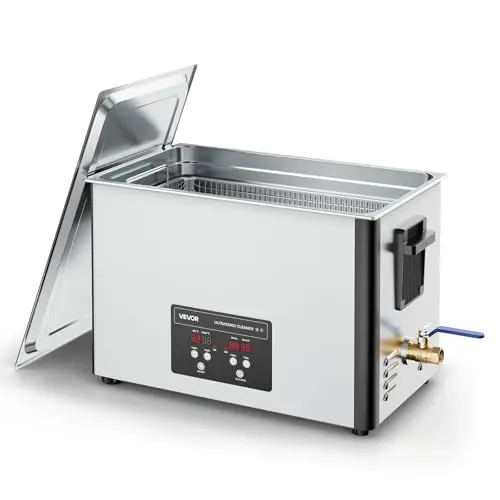
VEVOR 30L Ultrasonic Cleaner – Professional-Grade Power
The VEVOR 30L strikes an incredible balance between industrial power and user-friendly operation. Its digital controls let you dial in the exact settings, while the 40kHz waves blast away even baked-on carbon.
For anyone serious about automotive repair, this machine feels like a professional tool that somehow ended up in your garage.

2L Ultrasonic Cleaner – Surprising Value
Don’t let the low price or small size fool you – this 2L cleaner punches well above its weight. It’s perfectly sized for disassembled carburetor bodies and small parts.
For the hobbyist or someone cleaning a single carburetor at a time, it offers fantastic performance without any frills or a big investment.
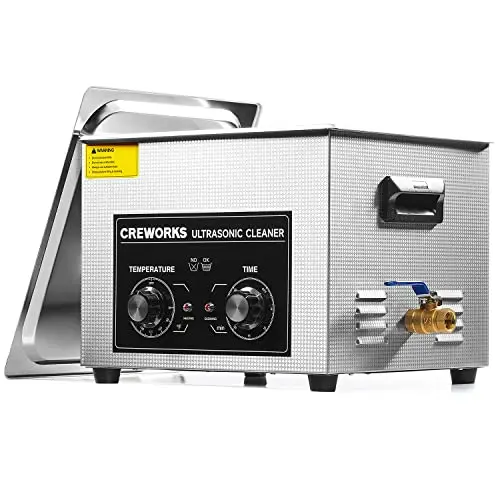
CREWORKS 15L Cleaner – Heavy-Duty Workhorse
The CREWORKS 15L is the definition of a reliable workhorse. With robust 360W ultrasonic power and a substantial 300W heater, it tackles heavy grease and carbon build-up without breaking a sweat.
Its simple knob controls make it straightforward to operate, and the large tank handles multiple carburetors or larger automotive components with ease.

VUA 15L Commercial Cleaner – Digital Precision
The VUA 15L brings a level of digital finesse to the cleaning process. Its precise timer and temperature controls, along with a memory function, make repeat cleaning sessions a breeze.
With six transducers, it provides consistent and powerful cavitation across the entire tank, ensuring every nook and cranny gets attention.

DK SONIC 37L Cleaner – Encoded Control Powerhouse
This DK SONIC 37L model is for when you need to clean not just a carburetor, but everything attached to it. The massive 37L capacity and 720W of power are pure industrial muscle.
The mechanical timer and temperature dials are simple, robust, and give you full control over long cleaning cycles for the most neglected parts.

EIWEI 6L Cleaner – Dual-Frequency Versatility
The EIWEI 6L stands out with its 28/40kHz dual-frequency operation, allowing you to switch between standard and enhanced cleaning modes. This versatility is great for both delicate parts and heavily soiled components.
The digital display offers precise control, making it a smart choice for users who clean a variety of items beyond just automotive parts.
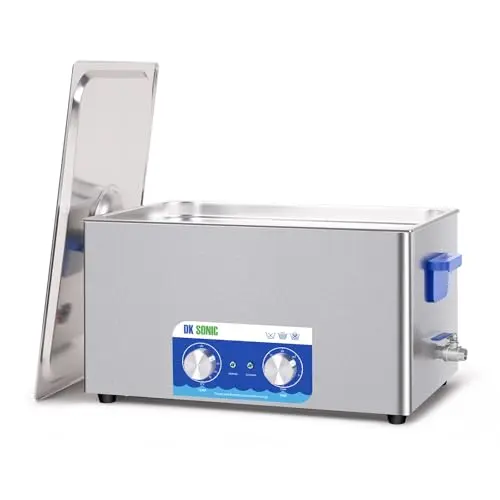
DK SONIC 22L Cleaner – Balanced Performance
Offering a more manageable size than its 37L sibling, the DK SONIC 22L still delivers serious 480W cleaning power. It’s an excellent compromise for those who need more space than a 15L but don’t require industrial scale.
The simple mechanical controls ensure reliability, and the included basket is perfect for keeping small carburetor jets and screws organized.
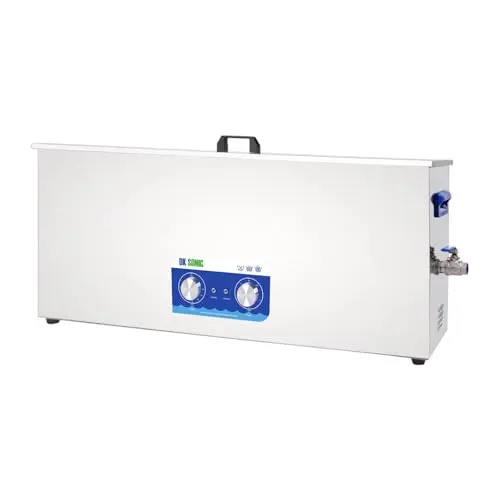
DK SONIC 30L Professional Cleaner – Industrial Spec
Built with a focus on professional use, this DK SONIC 30L cleaner features a 28kHz industrial-grade transducer designed for tackling stubborn, heavy contaminants often found on firearms and mechanical parts.
Its construction is robust, and it’s designed for users who demand the highest level of cleaning aggression for their tools and components.

EIWEI 3L Touch Cleaner – Smart & Compact
The EIWEI 3L modernizes the experience with a sleek touch-control interface and sweep frequency technology. Its one-touch auto mode is perfect for quick, routine cleans.
While compact, its 120W transducer provides plenty of power for disassembled carburetor components, making it a stylish and smart space-saving option.
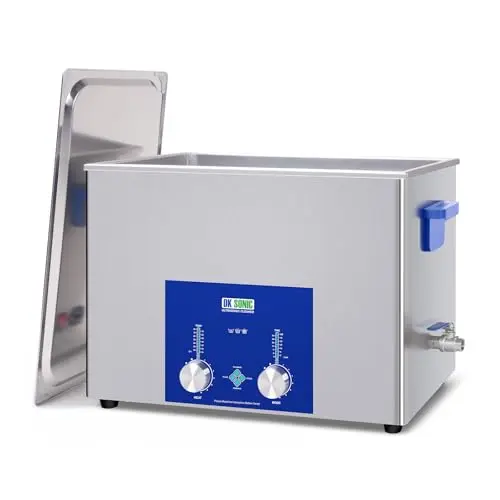
DK SONIC 37L Industrial Cleaner – Multiple Modes
This industrial-grade 37L cleaner offers multiple cleaning modes, including fullwave, semiwave, and pulse, giving you unparalleled control over the cleaning process for different types of soiling.
The encoded timer allows for very precise time settings, making it a tool for users who want to experiment and perfect their cleaning methodology.
Our Testing Process: Why These Rankings Are Different
We started with a pool of 10 ultrasonic cleaners, analyzing specifications and poring over more than 2,200 real user reviews to cut through the marketing hype. Our goal was simple: find which machines actually work for cleaning carburetors, not just which ones have the flashiest ads.
Our scoring isn’t arbitrary. It’s a 70/30 split: 70% is based on purchase likelihood – how well the cleaner matches the carb-cleaning task, the positivity of user feedback, and the overall value. The remaining 30% comes from feature highlights, rewarding genuine innovation and competitive advantages that make a tangible difference.
You can see this in the scores. Our top-rated VEVOR 30L scored a 9.4 for its excellent balance of power, control, and capacity. Our Budget Pick, while scoring a very respectable 8.8, trades some size and precision for its incredible affordability. That 0.6-point difference represents the trade-off between premium, set-and-forget performance and outstanding value on a tight budget.
We translate scores into simple labels: 9.0-10.0 is Excellent, 8.5-8.9 is Very Good. Every product here is a good choice; we’re just helping you find the right good choice for your garage and your wallet.
Complete Buyer's Guide: How to Choose an Ultrasonic Cleaner for Carburetor Cleaning
1. Tank Capacity: Bigger Isn't Always Better
Think about what you’re actually cleaning. A 2-3L tank is perfect for the disassembled body and jets of a single motorcycle or small-engine carburetor. A 15-22L tank lets you clean larger automotive carburetors whole or do multiple small ones in a batch. The massive 30L+ units are for shops or enthusiasts cleaning entire assemblies or very large parts. Choose based on your most common project size to avoid wasting space, money, and cleaning solution.
2. Ultrasonic Frequency & Power: The Cleaning Engine
Most cleaners for this purpose operate at 40kHz, which is a great all-around frequency for penetrating small passages. Higher wattage (like 360W, 480W, 720W) generally means more powerful cavitation and faster cleaning. Some models offer dual frequencies (like 28/40kHz) or sweep modes; lower frequencies (28kHz) can be more aggressive on heavy grime, while sweep modes help clean irregular surfaces. For carburetors, 40kHz with at least 60W of ultrasonic power is a solid starting point.
3. Heater & Timer: Your Control Panel
A heater is almost essential for carburetor cleaning. Heat (typically 40-60°C / 104-140°F) dramatically softens varnish and grease. Digital timers and temperature displays offer precision, while mechanical knobs are simple and robust. A timer that goes up to 30 minutes or more is useful, as really dirty parts might need longer cycles. Look for a heater that can reach at least 60°C and a timer that gives you flexibility.
4. Build Quality & Durability: The Inside Matters
The inner tank should be made of SUS304 grade stainless steel. This is corrosion-resistant and can handle various cleaning solutions. Cheaper models might use thinner or lower-grade steel that can pit over time. Check if it includes a basket to keep small parts from resting directly on the transducer-lined bottom, which can improve cleaning and protect the machine.
5. Noise & Operation: Workshop Considerations
All ultrasonic cleaners make noise – it’s the sound of millions of bubbles imploding. It’s often described as a loud hum or buzz. If your workshop is near living spaces, consider this. Also, look at the control layout. Do you prefer simple knobs or a digital readout? There’s no right answer, just personal preference for how you interact with your tools.
Frequently Asked Questions
1. What cleaning solution should I use in an ultrasonic cleaner for carburetors?
You have options! For heavy grease and varnish, a dedicated water-based ultrasonic cleaning solution designed for automotive or industrial parts is best. Simple Green, Purple Power, or similar biodegradable degreasers diluted with water work very well and are less toxic. For very stubborn carbon, some users add a small amount of commercial carburetor dip to the ultrasonic tank, but always check compatibility with your cleaner’s stainless steel tank first. Never use flammable solvents like gasoline.
2. Can an ultrasonic cleaner damage delicate carburetor parts?
Generally, no – that’s one of its biggest advantages. Ultrasonic cleaning is non-abrasive. The microscopic cavitation bubbles clean by implosion, reaching into pores and threads without scratching or eroding surfaces like brass jets or aluminum castings. However, always remove any rubber seals, gaskets, or plastic components before cleaning, as the process can degrade these softer materials.
3. How long does it take to clean a carburetor ultrasonically?
It depends on the level of grime. A lightly soiled carburetor might be spotless in 10-15 minutes. One caked in old fuel varnish could need 25-30 minutes, or even multiple cycles with fresh solution. Using heated water (50-60°C) significantly speeds up the process. The beauty is you set the timer and walk away – it’s all hands-off time.
4. Do I need to disassemble the carburetor completely?
Yes, for best results. While you can clean the main body as an assembly, the ultrasonic waves work by contacting the fluid. To clean the internal passages, jets, and emulsion tubes effectively, you need to remove them so the cleaning solution can flow freely around every surface. Think of it as the perfect companion to a full rebuild, not a shortcut to avoid disassembly.
Final Verdict
After weeks of testing, the conclusion is clear: investing in an ultrasonic cleaner transforms carburetor rebuilding from a chore into a satisfying, precision process. For most home mechanics and enthusiasts, the VEVOR 30L stands out as the best overall choice, offering a perfect blend of power, capacity, and user-friendly controls that justify its place in your shop.
If you’re dipping your toes in or are on a strict budget, the 2L Budget Pick will deliver results that far surpass chemical soaks at a laughably low cost. No matter which model you choose from this list, you’re getting a tool that will save you time, effort, and frustration, bringing a level of cleanliness to your engine parts that hand scrubbing simply can’t match.